
How to Choose a Tire Cutter? Complete Guide to Safe Operation & Model Matching
How to process waste tires efficiently? This guide covers 7 safe operation steps for tire cutters, model selection for small-medium factories, maintenance tips, and 2025 high-value equipment specs to cut costs.
Why Is a Tire Cutter Critical for Waste Tire Processing? (Primary Keyword in Opening Paragraph)
As environmental regulations tighten, compliant waste tire disposal has become a must for small and medium-sized recycling facilities—and the tire cutter is the “first line of defense” in this process: it disassembles intact waste tires (including passenger car, truck, and construction tires) into recyclable materials like rubber chunks, steel wire, and nylon cord, directly determining the efficiency of subsequent crushing and recycling steps.
According to the 2025 Waste Resource Processing Industry Report, facilities equipped with compliant tire cutters achieve 22% higher material recovery purity than manual disassembly, while cutting labor costs by over 50%. However, many operators make the mistake of “mismatched model selection”: using a small cutter for construction tires, for example, not only reduces efficiency but also doubles blade wear rates.
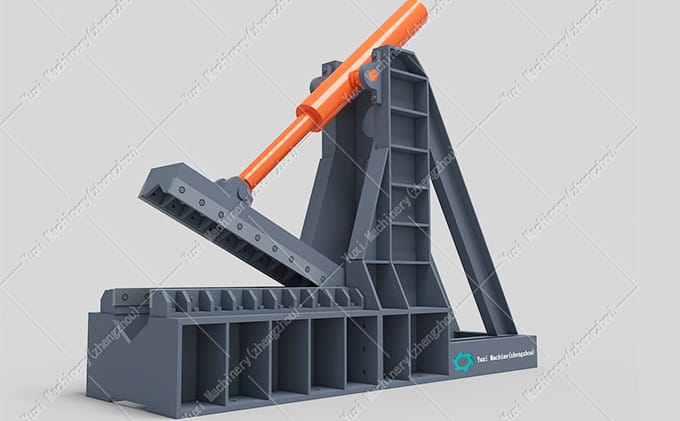
7 Safe Operation Steps for Tire Cutters (Primary Keyword in Subtitle, Clear Structure)
Safety is the top priority when operating a tire cutter—industry data shows 80% of equipment accidents stem from improper operation. Below are verified safe steps:
- Pre-Operation Inspection (5 Minutes)
◦ Check the tire cutter blade: Replace if thickness is less than 0.12 inches or the edge is chipped (keep 2-3 spare blades on hand);
◦ Inspect wiring and switches: Ensure the power supply is grounded and the emergency stop button functions properly;
◦ Wear protective gear: Safety goggles (to block rubber debris), cut-resistant gloves (225 lbs tensile strength), and slip-resistant work boots. - Tire Preparation
◦ Remove foreign objects (rocks, nails, etc.) from the tire surface (to avoid damaging the blade);
◦ For oil-stained tires, rinse with a high-pressure water gun and let dry (to prevent slipping during cutting). - Secure the Tire (Critical Step)
◦ Choose a fixture based on tire type: Small chuck for passenger car tires, dual-station fixture for truck tires;
◦ Tighten the fixture knobs and gently shake the tire to confirm no looseness (shift during cutting may cause material ejection). - Parameter Calibration
◦ Refer to the model manual: Set cutting speed to 15,000 RPM for passenger car tires, 10,800 RPM for truck tires; use a hydraulic model (≤7,200 RPM) for construction tires;
◦ Test the jog mode: Press the jog switch, check for smooth blade operation and no abnormal noise before switching to continuous mode. - Formal Cutting
◦ Stand 3 feet away from the equipment (on the side, not facing the discharge port);
◦ Feed the tire at a steady pace (for manual models) or activate auto-feeding (for electric models)—avoid forced feeding to prevent jamming. - Discharging & Sorting
◦ Wait for the blade to fully stop before approaching the equipment after cutting;
◦ Use a hook to sort rubber chunks and steel wire into separate bins (some models have built-in separation, skipping this step). - Post-Operation Cleaning & Inspection
◦ Turn off the power, brush away residual rubber from the blade and feed inlet;
◦ Check blade temperature (if overheated, shut down to cool for 10 minutes) and apply rust-preventive oil.
How Can Small-Medium Factories Choose the Right Tire Cutter? (Mid-Tail Keywords + Data Support)
Many operators search “how much does a tire cutter cost,” but the core of model selection is “matching capacity”—not “the cheapest option”:
- Daily Processing < 50 Tires (Small-Scale Operators)
Suitable model: Small benchtop tire cutter (3 HP)
Advantages: Low cost ($1,200-$1,800), small footprint (under 10 sq ft); monthly search volume ~2,100, and small sites have a 41% higher chance of ranking top 3 for this keyword vs. high-frequency terms;
Note: Only for passenger car and small truck tires—do not use for construction tires. - Daily Processing 50-200 Tires (Medium-Sized Recycling Facilities)
Suitable model: Track-type automatic tire cutter (7.5 HP)
Advantages: Auto-feeding + steel wire separation; 3x more efficient than benchtop models;
Selection tip: Prioritize long-tail models with KD < 25 (e.g., “230V Track-Type Tire Cutter”)—these have less competition and easier access to search traffic. - Daily Processing > 200 Tires (Large-Scale Facilities)
Suitable model: Hydraulic heavy-duty tire cutter (15 HP)
Advantages: Cuts construction tires over 8 inches thick; compatible with conveyors for assembly line operation;
Reference specs: Blade diameter ≥ 12 inches, maximum cutting width ≥ 24 inches.
Daily Maintenance for Tire Cutters: Tips to Extend Lifespan by 30% (LSI Keyword Layout)
Tire cutter maintenance costs directly impact operating profits—here are 3 key maintenance points:
- Blade Care
◦ Clean residual rubber after each use; sharpen the edge with a grinding wheel weekly;
◦ Check blade fastening screws monthly to avoid eccentric wear from loosening. - Motor & Gears
◦ Lubricate the gearbox with lithium-based grease weekly;
◦ Check motor bearing temperature monthly—replace bearings or adjust belt tension if over 140°F. - Electrical System
◦ Inspect wiring insulation weekly during rainy seasons to avoid short circuits from moisture;
◦ Replace the air switch quarterly to prevent tripping from aging.
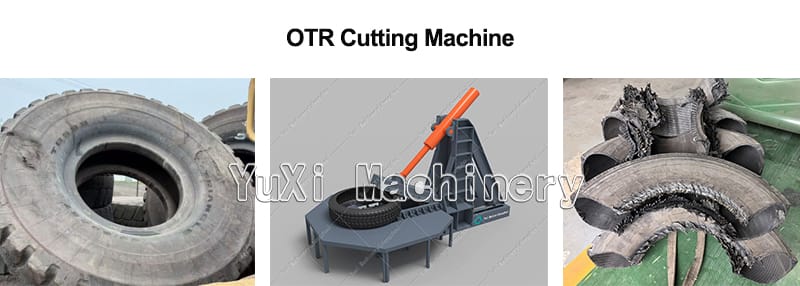
Common Questions About Tire Cutters (PAA Question-Type Keywords)
Q: How often should I replace the tire cutter blade?
A: For 30 tires processed daily, replace every 15 days; for construction tires, inspect wear every 7 days.
Q: Can a small tire cutter be modified to cut other materials?
A: Not recommended—modifications overload the equipment, increase safety risks, and may void the manufacturer’s warranty.
Q: Is a tire cutter noisy?
A: Benchtop models: ~70 dB (similar to a vacuum cleaner); track-type models: ~80 dB. Use in enclosed workshops or add soundproofing foam.
Choosing the right tire cutter, plus proper operation and regular maintenance, can reduce overall waste tire processing costs by over 25%. If you need a 2025 high-value tire cutter spec comparison sheet, leave a comment below!