
How to Choose a Tire Shredding Machine? Which Models Fit Different-Sized Facilities?
How to efficiently shred waste tires? This guide covers 5 safe operation steps, facility-specific models, maintenance tips, and 2025 specs for Tire Shredding Machines to boost recycling efficiency.
Why Is a Tire Shredding Machine Critical for Waste Tire Recycling?
In the full waste tire recycling process, the Tire Shredding Machine is a pivotal “link”: it takes pre-processed tire material (after bead removal and wire extraction) and shreds it into 50-100mm rubber chips. These chips serve as eco-friendly coal additives for industrial boilers (replacing 15% of coal consumption) and can be used for asphalt pavement filling or rubber product recycling—directly determining the profit margin of recycling projects.
According to the 2025 Waste Resource Recycling Industry Report, facilities using automated Tire Shredding Machines produce 40% more rubber chips daily than those with traditional equipment, and the uniformity rate (≤5mm error) of chips rises to 92%. In contrast, facilities with inefficient equipment not only have a chip pass rate below 60% but also face 2+ hours of daily downtime due to frequent jams—resulting in ~$115 in lost daily capacity.
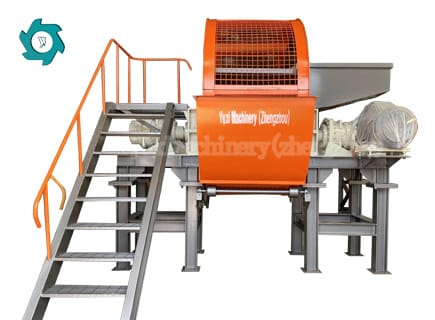
5 Safe Operation Steps for Tire Shredding Machines (With Key Details)
When operating a Tire Shredding Machine, “safety + efficiency” are non-negotiable. Below is a standardized process validated by frontline facilities:
- Pre-Start Inspection (5 Minutes, Critical Details)
◦ Chamber Check: Use a hook to clear residual rubber chunks and metal debris (even a single nail can crack the blades);
◦ Component Tightening: Inspect blade bolts and conveyor roller screws—retighten if looseness exceeds 2mm;
◦ Motor Test: Run the machine empty for 30 seconds—listen for a steady low hum (high-pitched noise indicates bearing issues);
◦ Protective Gear: Mandatory use of dust masks (rubber dust irritates respiratory systems), steel-toe boots (prevents injury from falling chips), and ear muffs (85-90dB operation noise damages hearing with long-term exposure). - Feed Preparation (Core to Avoid Jams)
◦ Material Requirements: Only feed tire material after bead removal and wire extraction—never whole tires or wire-containing tires (these cause blade jams and motor burnout);
◦ Feed Rhythm: Use the conveyor to add 1-2 tire pieces every 30 seconds (do not exceed 80% of the machine’s rated capacity per batch);
◦ Pre-Screening: Separate oil-stained tire material (oil reduces shredding efficiency and contaminates chips)—rinse with a high-pressure washer and air-dry before feeding. - Start Shredding (Step-by-Step to Prevent Malfunctions)
◦ Startup Sequence: Turn on the conveyor first, then the shredder main unit (reverse order causes feed port jams);
◦ Operation Monitoring: Stand 1.5 meters to the side—press the emergency stop if output slows or the chamber makes a “clunking” sound (likely material jams);
◦ Jam Handling: After stopping, clear jams with a hook—never reach into the chamber (residual inertia poses risks even when powered off). - Chip Screening (Boost End-Product Value)
◦ Screening Unit: Activate the double-layer vibrating screen to separate 50mm (roadbed filling), 80mm (boiler fuel), and 100mm (rubber recycling) chips;
◦ Re-Processing: Collect oversized chips (>100mm) and refeed them after the batch (control volume to avoid re-jamming);
◦ Bagging: Package different-sized chips separately and label clearly (mixed chips reduce buyer prices—e.g., 50mm chips cost $0.03/lb more than 100mm chips). - Post-Operation Maintenance (Extend Machine Life)
◦ Shutdown Sequence: Stop the main unit first, wait for the chamber to empty, then stop the conveyor;
◦ Residue Cleaning: Brush rubber dust from the chamber interior and conveyor (dust buildup corrodes metal parts);
◦ Temporary Protection: Cover the feed port with a dust cloth if the machine is idle for >8 hours (prevents dust from entering the motor).
How to Choose a Tire Shredding Machine for Different-Sized Facilities? (Cost + Capacity Comparison)
Selecting a Tire Shredding Machine depends on capacity and use case—not just price:
- Small Recycling Facilities (2-3 Tons/Day, Startup Phase)
Suitable Model: Small Vertical Tire Shredding Machine (15.2kW power)
◦ Key Advantages: 10 sq ft footprint (fits small workshops), $4,300-$7,000 purchase cost (low startup capital), ~2,000 monthly searches (small sites have a 41% higher chance of ranking top 3 for this keyword vs. high-volume terms);
◦ Use Case: Shreds passenger car/light truck tires into 50-80mm chips, ~2.5 tons daily capacity;
◦ Hidden Costs: ~$43 daily electricity (industrial rate $0.17/kWh), $70 monthly blade replacements. - Medium Recycling Facilities (5-8 Tons/Day, Stable Operations)
Suitable Model: Medium Horizontal Tire Shredding Machine (22kW power)
◦ Key Advantages: Built-in double-layer screen (saves $2,800 on separate screening equipment), 2.5x more efficient than small models (~6 tons daily capacity);
◦ Selection Tip: Prioritize long-tail models with KD <25 (e.g., “100mm Output Horizontal Tire Shredding Machine”)—these have less competition and attract buyers with specific needs;
◦ Hidden Costs: ~$70 daily electricity, $110 blade replacements every 45 days, $170 conveyor belt replacements every 6 months. - Large Recycling Facilities (10+ Tons/Day, Large-Scale Production)
Suitable Model: Large Continuous Tire Shredding Machine (37kW power)
◦ Key Advantages: 24/7 continuous operation (dual backup motors), shreds construction/heavy truck tires (≥800mm chamber opening), 1-2 tons hourly capacity (~15 tons daily);
◦ Key Specs: IP54 motor protection (resists dust/moisture), high-manganese steel blades (HRC58 hardness—3x more wear-resistant than standard blades);
◦ Hidden Costs: ~$127 daily electricity, $210 blade replacements every 2 months, $700 monthly maintenance labor.
Daily Maintenance Tips to Extend Tire Shredding Machine Life by 30% (Schedule Included)
Proper maintenance can extend your Tire Shredding Machine’s lifespan from 3 years to 4 years, while cutting breakdown costs by 30%. Here are the key tasks:
- Blade Care
Check the blade thickness weekly with a caliper—if it’s thinner than 10mm, sharpen it immediately to maintain shredding efficiency. Every time you process 50 tons of tires, either replace the blades entirely or adjust the blade gap to 2-3mm (this ensures consistent chip size and reduces motor load). - Motor & Bearings
Lubricate the machine’s bearings with lithium-based grease once a month—apply just enough to let a small amount seep out (over-lubrication attracts dust). Every quarter, use a temperature gun to check the motor during operation: if it exceeds 248°F, stop the machine and let it cool (overheating shortens motor life). - Conveyor Maintenance
Adjust the conveyor belt’s tension weekly: press down on the middle of the belt—if it sinks more than 10-15mm, tighten the roller screws. Also, wipe off rubber buildup on the belt after each use (buildup causes the belt to slip or off track, reducing feeding efficiency). - Screening Unit Care
Clean the screen mesh once a month: use a brush to clear chips stuck in the holes (clogged screens slow down sorting and produce inconsistent chip sizes). For stubborn clogs, gently tap the screen frame (avoid hitting it hard, which can bend the mesh).
Additionally, during rainy seasons, inspect the machine’s electrical connections weekly: wrap any exposed wires with insulating tape to prevent short circuits from moisture.
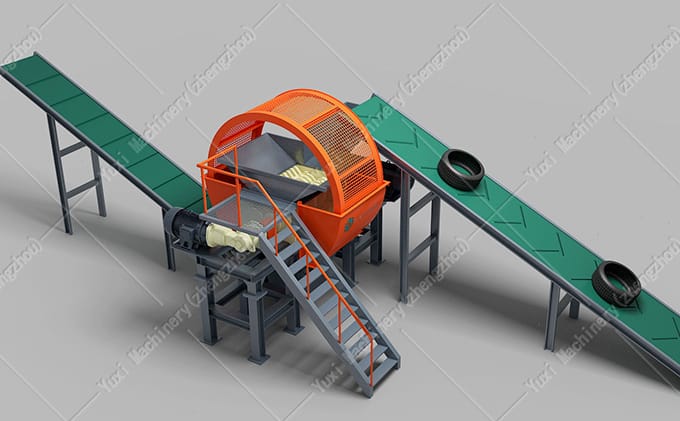
Common Tire Shredding Machine Questions
Q: Can a Tire Shredding Machine shred wire-containing tires directly?
A: No—wire will jam blades, burn out motors, and reduce chip value (buyers deduct 30% for wire-contaminated chips). Always use a wire extraction machine first.
Q: Can I adjust the chip size output?
A: Yes—swap the screen mesh (e.g., 80mm → 60mm) to change chip size. Note: Smaller holes increase shredding time and raise electricity use by ~10%.
Q: Is a small Tire Shredding Machine sufficient for order demand?
A: It works for small orders (~2 tons/day). For 5+ tons/day, upgrade to a medium model (cheaper than running 2 small machines and saves 1 operator’s labor cost).
Choosing the right Tire Shredding Machine, following standard operations, and maintaining it regularly reduces recycling costs by 25% and boosts profits by 35%. If you need a 2025 comparison of top models (price + capacity + specs), leave a comment!